What Are the Main Components of a Complete Smart Home System Today?
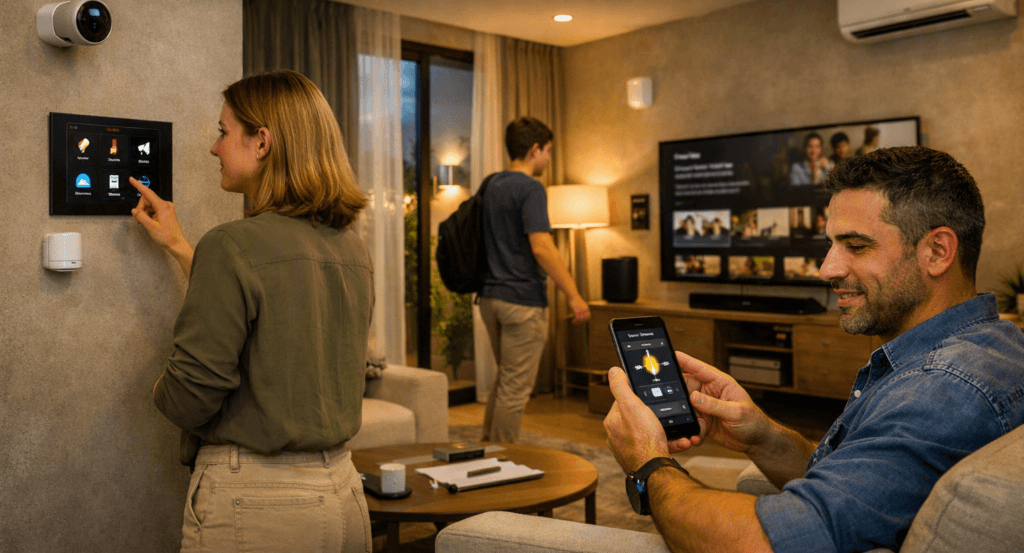
A Smart home Dubai setup connects different devices in a home so they can work together and be managed more easily. Instead of using separate controls for lights, air conditioning, security, curtains, and entertainment, a smart home system can bring these functions into one connected setup. Understanding the main components helps homeowners know how these systems work and what each part does.
1. Smart Home Controller
The smart home controller is one of the main parts of the system. It acts as a central point that helps different devices communicate with each other.
For example, a controller can receive a command from a mobile phone and send it to the lights, curtains, or air conditioning system. Some systems use a dedicated control unit, while others use a smart hub or software platform.
A good controller should support the devices used in the home and allow them to work together smoothly.
2. Smart Lighting
Smart lighting allows homeowners to control lights without using only traditional wall switches. Lights can be controlled through mobile apps, touch panels, voice commands, sensors, or automated schedules.
For example, lights can turn on when someone enters a room and switch off when the room becomes empty. Brightness can also be adjusted based on the activity or time of day.
Smart lighting can make daily routines easier while also helping manage energy use.
3. Smart Climate Control
Air conditioning is an important part of home comfort, especially in warm climates. Smart climate control connects air conditioning systems with automation controls.
Users may be able to adjust temperature settings through a phone, tablet, touch panel, or voice command. Some systems can also use sensors to understand room conditions and adjust settings automatically.
Scheduling can also help prevent air conditioning from running when rooms are not being used.
4. Smart Security Systems
Security is another major component of a complete smart home system. Common devices include smart cameras, video doorbells, smart locks, motion sensors, door sensors, and alarm systems.
Smart cameras can provide live video through a connected device. Door and window sensors can send alerts when unexpected activity is detected.
Smart locks can also provide keyless access through codes, mobile devices, or other approved methods. These features can make it easier to monitor access to different areas of a property.
5. Motorized Curtains and Blinds
Motorized curtains and blinds can be connected to the home automation system. Instead of opening and closing them manually, users can control them through switches, apps, remote controls, or scheduled settings.
For example, curtains can be programmed to open in the morning and close in the evening. They can also work with lighting and climate controls to create a more comfortable indoor environment.
6. Smart Entertainment
Entertainment systems can also be included in home automation. These may include televisions, speakers, projectors, music systems, and home cinema equipment.
A connected system can allow users to control several entertainment devices from one interface. For example, a single command can start a movie, lower the lights, close the curtains, and adjust the audio system.
This type of integration reduces the need to operate each device separately.
7. Sensors and Detectors
Sensors help a smart home understand what is happening inside different areas. Common examples include motion sensors, temperature sensors, light sensors, door sensors, and occupancy sensors.
These devices provide information that can trigger automatic actions. A motion sensor, for example, may tell the lighting system to turn on when someone enters a room.
Sensors are important because they allow automation to respond to real conditions instead of relying only on manual commands.
8. Mobile and Voice Control
A smart home usually needs an easy way for people to control connected devices. Mobile apps can provide access to lighting, security, climate control, entertainment, and other functions.
Voice control can provide another simple option. Users may be able to give commands such as turning lights on, changing the temperature, or checking connected devices.
The control method depends on the system and the devices installed in the property.
9. Network and Internet Connection
A reliable network is an important foundation for connected home devices. Smart devices may communicate through Wi-Fi, Ethernet, Bluetooth, or other communication technologies.
The network allows devices to exchange information and lets users access some functions remotely. A strong and properly planned network can help reduce connection problems and improve system performance.
10. Automation Software
The final major component is the software that controls how different devices work together. Automation rules can connect several actions into one routine.
For example, a “leaving home” routine could turn off selected lights, adjust the air conditioning, close curtains, and activate security devices. These routines can be based on schedules, sensor activity, or user commands.
A complete Smart home Dubai system can therefore combine controllers, lighting, climate control, security, sensors, entertainment, network equipment, and automation software into one connected environment.