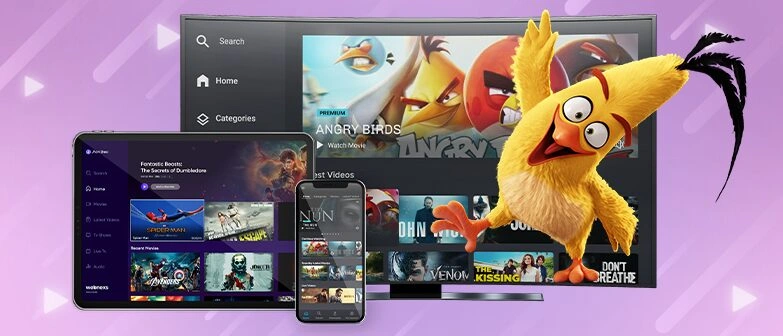
Step-by-Step Guide to Create a Streaming Platform for Entertainment & Business
The streaming industry has grown dramatically, changing how people watch entertainment and how businesses connect with their audiences. With the demand for on-demand and live video services continuing to rise—from major platforms like Netflix and Disney+ to business-specific solutions—creating your streaming platform in 2025 is more achievable than ever before, thanks to advanced technology.
This blog will walk you through a step-by-step guide to creating a streaming platform, covering everything from market research to development, features, monetization, and future-proofing your app.
Why Build a Streaming Platform in 2025?
Before diving into the steps, it’s important to understand why businesses and entrepreneurs are investing heavily in streaming platforms:
- Entertainment Demand: Viewers prefer on-demand content across genres like movies, TV, music, and sports.
- Business Needs: Companies use streaming for product launches, webinars, training, and real-time customer engagement.
- Rising Market Value: The global video streaming market is projected to cross $200 billion by 2030, making it one of the most lucrative digital ventures.
- Monetization Potential: Subscriptions, ads, pay-per-view, and hybrid models allow diverse revenue streams.
Step 1: Define Your Niche and Audience
Not all streaming platforms serve the same purpose. You need to decide your focus:
- Entertainment: Movies, TV shows, sports, documentaries, or music.
- Business/Enterprise: Training modules, webinars, conferences, and product demos.
- Education: Online classes, tutorials, and e-learning content.
- Hybrid Models: Mix of entertainment and business streaming.
Clearly defining your audience will shape the features, design, and monetization strategies.
Step 2: Choose the Right Business Model
Your streaming platform’s success depends on the revenue model you adopt. Here are the most popular ones:
- Subscription-Based (SVOD) – Users pay monthly/annual fees (e.g., Netflix, Disney+).
- Ad-Supported (AVOD) – Free to use, but revenue comes from ads (e.g., YouTube).
- Transactional/Pay-Per-View (TVOD) – Users pay for specific content (e.g., iTunes).
- Hybrid Models – Combination of subscriptions, ads, and pay-per-view.
- Enterprise Licensing – Businesses pay for a white-label solution for internal or customer-facing use.
Step 3: Select Essential Features
Your feature set will determine the user experience. Must-have features include:
For Entertainment Platforms:
- User registration & profile management
- Advanced search & personalized recommendations
- Multiple content categories and genres
- Multi-device compatibility (mobile, web, smart TVs)
- High-quality video playback & adaptive streaming
- Watchlists & favorites
- Ratings, reviews, and engagement features
For Business Platforms:
- Secure logins & user management
- Live streaming with low latency
- On-demand video library
- Screen sharing & presentation tools
- Integration with CRM, LMS, or collaboration platforms
- Analytics dashboard for performance tracking
Step 4: Choose the Right Tech Stack
Your platform’s performance and scalability depend heavily on the chosen technologies.
- Frontend: React, Angular, Vue.js for web; Swift (iOS) and Kotlin (Android) for mobile.
- Backend: Node.js, Django, or Ruby on Rails with scalable cloud infrastructure.
- Database: PostgreSQL, MongoDB, or MySQL.
- Cloud & Hosting: AWS, Google Cloud, or Azure.
- Streaming Protocols: HLS, RTMP, MPEG-DASH.
- CDN (Content Delivery Network): Cloudflare, Akamai, or AWS CloudFront for global content delivery.
Step 5: Ensure Scalability, Security & Compliance
A reliable streaming platform requires:
- Scalability: Auto-scaling servers to handle traffic spikes.
- Security: End-to-end encryption, DRM (Digital Rights Management), and multi-factor authentication.
- Compliance: GDPR, HIPAA (for healthcare-related streaming), and copyright laws.
Step 6: Design a Seamless User Experience
UI/UX design plays a critical role in keeping users engaged. Focus on:
- Minimalist design with intuitive navigation
- Personalized content suggestions
- Easy onboarding and subscription flows
- Interactive engagement tools (polls, chats, Q&A for business platforms)
Step 7: Plan Monetization Strategies
To maximize revenue, consider:
- Freemium Model – Offer free content with premium upgrades.
- Tiered Subscriptions – Different plans for different audiences.
- Ad Insertion – Dynamic ads for AVOD models.
- Corporate Packages – Enterprise clients pay for streaming infrastructure.
Step 8: Test & Launch
Before going live, run rigorous testing for:
- Load handling and scalability
- Streaming speed and video quality
- Security vulnerabilities
- Payment gateway integrations
- Multi-device compatibility
Once tested, launch your MVP (Minimum Viable Product) and gradually scale with user feedback.
Step 9: Market Your Streaming Platform
Success depends on how effectively you promote your platform. Strategies include:
- SEO and content marketing
- Social media campaigns
- Influencer and partnership marketing
- Free trials & discounts for new users
- Targeted ads based on audience behavior
Step 10: Future-Proof with Emerging Tech
Stay ahead of the competition by integrating:
- AI & Machine Learning – Personalized recommendations, predictive analytics.
- AR/VR Streaming – Immersive experiences for entertainment and business.
- Blockchain – Secure content distribution and micropayments.
- 5G Support – Faster, buffer-free streaming experiences.
Final Thoughts
Building a streaming platform in 2025 is a smart business move, whether it’s for entertainment or a specific industry. By carefully defining your niche and target audience, you lay the foundation for a platform that speaks directly to user needs. Selecting the right technology stack ensures your streaming service is scalable, secure, and capable of delivering a seamless experience across devices. Adding essential features such as personalized recommendations, offline downloads, multi-device support, and interactive engagement tools elevates the user experience and helps your app stand out in a saturated market. Finally, a well-thought-out monetization strategy—whether through subscription plans, advertisements, pay-per-view, or a hybrid model—ensures your platform not only attracts viewers but also generates consistent revenue. When all these elements come together with the right execution and ongoing updates, you can create a streaming service that thrives in the highly competitive entertainment industry and positions itself for long-term success.
The emergence of live streaming apps in 2025 is causing one of the biggest changes to the entertainment sector in Read more