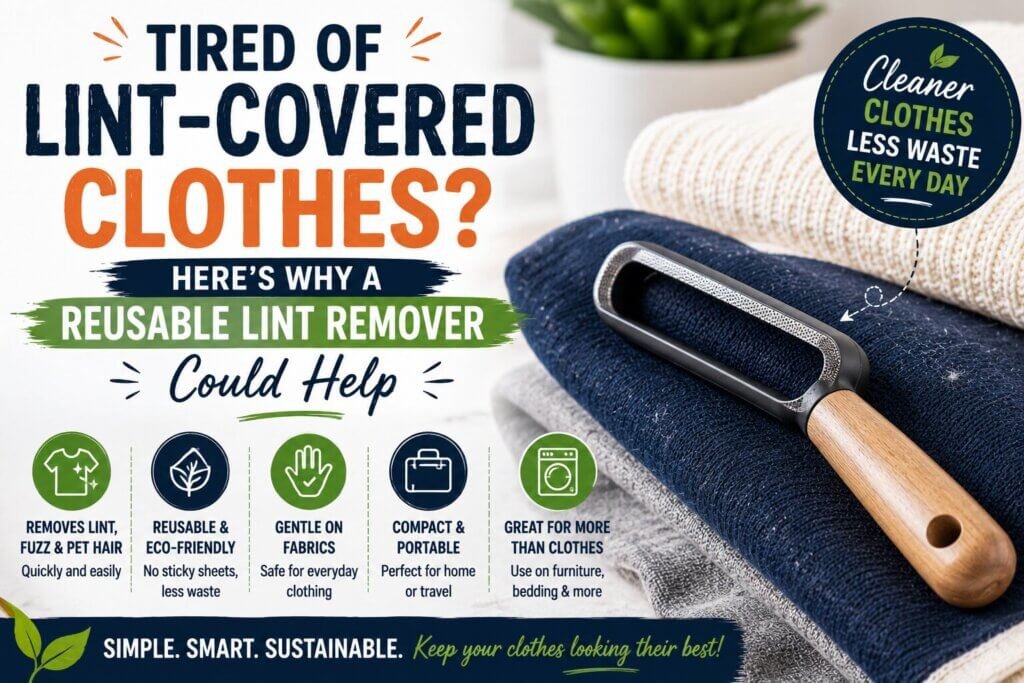
Tired of Lint-Covered Clothes? Here’s Why a Reusable Lint Remover Could Help
You put on a clean black shirt, look in the mirror, and notice tiny white fibers scattered across the fabric. Then you spot a few strands of pet hair on your trousers. Maybe your favorite sweater has started looking fuzzy around the sleeves.
Sound familiar?
Lint, fuzz, hair, and loose fibers can make perfectly clean clothes look untidy. Washing doesn’t always solve the problem either. In some cases, laundry can actually leave behind more fibers, especially when different fabrics rub together during washing and drying.
A simple Reusable Lint Remover can offer a convenient way to deal with these everyday clothing problems. Unlike disposable sticky rollers, reusable options are designed to be used repeatedly, which can make them practical for regular clothing care.
But how do they work? Are they safe for every fabric? And can one really replace traditional lint rollers?
Let’s take a closer look.
What Is a Reusable Lint Remover?
A Reusable Lint Remover is a handheld tool designed to remove unwanted fibers, hair, fuzz, and surface debris from fabrics.
Unlike traditional adhesive rollers, many reusable lint removers don’t rely on disposable sticky sheets. Instead, they use a textured surface, brush, comb, or specially designed collection mechanism to lift unwanted material from fabric.
The exact design varies from one product to another.
Some are intended primarily for clothing, while others can also work on upholstery, bedding, blankets, and certain fabric-covered furniture.
The basic idea remains the same: remove unwanted material from the surface without throwing away a new adhesive sheet after every use.
Why Do Clothes Collect So Much Lint?
Lint doesn’t come from one single source.
Some of it comes from the clothes themselves. Fibers can loosen from fabrics through normal wear, washing, and drying.
Other material comes from outside sources.
Pet hair is an obvious example. If you have a dog or cat at home, their hair can easily end up on trousers, jackets, sweaters, and furniture.
Dust and other small particles can also settle on clothing throughout the day.
Certain fabrics tend to make these problems more noticeable.
Dark clothing, especially black or navy fabrics, can show light-colored lint immediately. Meanwhile, lighter clothes can make dark hairs and fibers stand out.
That’s why a shirt can be perfectly clean but still look messy.
The issue isn’t necessarily dirt.
Sometimes it’s simply what’s sitting on top of the fabric.
How Does a Reusable Lint Remover Work?
The working principle depends on the design.
Some reusable tools use fine bristles that catch loose fibers and hair. Others use a textured surface that lifts material from the fabric as you move the tool across it.
The tool creates enough friction or contact to collect unwanted fibers without requiring adhesive.
You generally move the remover over the fabric using short, controlled strokes.
Once the lint or hair collects on the tool, you remove the buildup according to the product’s instructions.
The process takes very little time, which makes it convenient for last-minute clothing touch-ups.
Why Use a Reusable Lint Remover Instead of Disposable Rollers?
Disposable rollers are useful.
They’re quick, familiar, and easy to find. Simply roll the adhesive surface over your clothes and tear off the used sheet when it becomes covered with lint.
The downside is that the sheets run out.
If you regularly remove pet hair or lint from clothing, you may go through many sheets over time.
A reusable tool offers a different approach.
Instead of replacing the adhesive surface, you clean or empty the tool and use it again.
That can make it convenient for frequent use and reduce the number of disposable sheets you need.
Neither option is automatically better for every person. The right choice depends on your clothing, cleaning habits, and preferences.
It Can Be Useful for Pet Owners
Pet hair is one of the biggest reasons people look for better ways to clean clothing.
A few hairs on a shirt may not seem like a big deal. But when you’re wearing dark trousers after sitting beside a shedding pet, the problem can become much more obvious.
A Reusable Lint Remover can help remove loose hair from suitable fabrics before you leave home.
It can also be useful for:
- Blankets
- Cushions
- Sofas
- Fabric chairs
- Jackets
- Bedding
Always check whether the tool is suitable for the specific material before using it.
It’s Handy for Quick Clothing Touch-Ups
Not every cleaning problem requires a full laundry cycle.
You may notice lint on your shirt five minutes before leaving for work. Perhaps your sweater collected fibers while sitting on the couch.
A reusable remover can provide a quick solution.
Keep one somewhere easy to reach, such as near your wardrobe, entryway, or laundry area.
That way, you can deal with small problems immediately instead of letting them build up.
This is one of the simplest ways a small cleaning tool can become part of your everyday routine.
Which Fabrics Need More Care?
Not all fabrics respond to lint-removing tools in the same way.
Sturdy cotton fabrics may tolerate more brushing than delicate materials.
Wool, cashmere, silk, lace, and loosely woven fabrics may require greater care.
A tool designed to remove surface fibers can sometimes pull at delicate threads if you use too much pressure.
Before using a Reusable Lint Remover on an expensive or delicate garment, check the care label and test the tool on a small, hidden area.
If you notice pulling, snagging, or surface damage, stop using it.
Gentle handling is usually better than aggressive scrubbing.
Use the Right Technique
You don’t need to press hard to remove lint.
In fact, excessive pressure may cause unnecessary friction.
Instead, lay the garment flat when possible and use smooth, controlled strokes.
Work in one direction rather than rapidly rubbing back and forth.
If you’re removing pet hair, several light passes may work better than one forceful pass.
Also avoid spending too long on one small section.
The goal is to lift loose material, not repeatedly scrape the fabric.
A Reusable Lint Remover Can Help Extend the Fresh Look of Clothes
Clothing doesn’t necessarily need to look worn just because it has collected lint.
Removing loose fibers and hair can improve its appearance between washes.
This can be particularly useful for clothing that doesn’t need frequent washing.
For example, a jacket may not need to go into the washing machine simply because it has collected a little pet hair.
A quick lint-removing session may be enough to make it look presentable again.
That doesn’t replace normal laundering when clothing needs to be washed.
It simply helps with surface-level messes between washes.
Don’t Confuse Lint With Pilling
This distinction matters.
Lint consists largely of loose fibers and other material sitting on the surface of fabric.
Pilling happens when fibers become tangled and form small balls on the fabric.
A lint remover may remove loose fibers and hair, but it isn’t necessarily designed to fix serious pilling.
If you’re dealing with pills, use a tool specifically designed for fabric pilling and follow its instructions carefully.
Using the wrong tool can damage the garment.
How to Keep Your Clothes Looking Cleaner
A lint remover is only one part of good clothing care.
A few simple habits can also reduce lint buildup.
Wash Similar Fabrics Together
Mixing heavily shedding fabrics with dark clothing can leave unwanted fibers behind.
Sorting laundry appropriately can help.
Empty Pockets
Tissues and paper products can create a huge amount of lint when accidentally washed with clothing.
Check pockets before starting the washing machine.
Clean the Dryer Filter
A blocked or dirty lint filter can reduce dryer performance and allow lint to accumulate.
Clean it regularly according to the appliance manufacturer’s instructions.
Store Clothes Properly
Keeping clean clothing away from dusty areas can reduce surface debris.
Avoid Overloading the Washer
Clothes need enough room to move properly during washing.
Follow your washing machine’s recommendations for load size.
What Should You Look for in a Reusable Lint Remover?
If you’re considering one, focus on practical features rather than simply choosing the most complicated design.
Fabric Compatibility
Check which fabrics the tool is designed to handle.
Comfortable Handle
A comfortable grip makes repeated use easier.
Easy Cleaning
The tool should be straightforward to empty or clean after use.
Portable Design
A compact remover can be useful for travel, work, or keeping in a drawer.
Durable Construction
If you plan to use it regularly, look for a design that can withstand repeated handling.
Suitable Surface
If you want to use the tool on furniture or bedding as well as clothing, make sure it is designed for those applications.
Common Mistakes to Avoid
Even a simple lint-removing tool can cause problems when used incorrectly.
Pressing Too Hard
Heavy pressure isn’t necessary and may damage delicate fibers.
Using It on Every Fabric
Always check fabric compatibility.
Moving Too Quickly
Slow, controlled strokes can provide better coverage.
Ignoring Snags
If the tool catches or pulls at the fabric, stop immediately.
Forgetting to Clean the Tool
A clogged remover may become less effective.
Expecting It to Remove Every Type of Stain
Lint removers are designed for surface fibers, hair, fuzz, and similar debris. They aren’t substitutes for stain treatment or normal washing.
Can a Reusable Lint Remover Replace a Sticky Roller?
Sometimes, but not necessarily for everyone.
A reusable tool can handle many everyday lint and pet-hair problems without requiring replacement sheets.
However, disposable rollers can still be useful when you want a very quick cleanup or need to remove fine particles from a particularly delicate surface.
The best option depends on your needs.
If you frequently use disposable rollers, switching to a reusable option may be worth considering.
If you only occasionally remove lint, either solution may work perfectly well.
Is It Worth Keeping One at Home?
For many households, yes.
It’s a small tool that takes up very little storage space and can solve a surprisingly common problem.
You don’t need to use it every day.
But when your favorite sweater suddenly looks covered in fuzz or your trousers attract pet hair before an important outing, having one nearby can be convenient.
The value comes from accessibility.
A tool you can grab in seconds is more useful than one hidden at the back of a cupboard.
Frequently Asked Questions
What does a Reusable Lint Remover remove?
Depending on the design, it can remove loose lint, pet hair, fuzz, fibers, and other surface debris from suitable fabrics.
Can I use it on sweaters?
Some sweaters can be cleaned with a suitable lint remover, but delicate knits require extra care. Check the garment label and test a hidden area first.
Is it safe for black clothing?
It can be, provided the tool is appropriate for the fabric. Black clothing often benefits from lint removal because light-colored fibers are especially visible.
Can it remove pet hair?
Many reusable lint removers are designed to collect pet hair from suitable fabrics and surfaces.
How often should I use one?
Use it whenever your clothes or fabric surfaces collect visible lint, hair, or fuzz. There’s no need to use it on clothing that doesn’t require cleaning.
Does it replace washing clothes?
No. It only removes surface debris. Clothing still needs to be washed according to its care requirements.
Final Thoughts
Lint-covered clothing can be frustrating, especially when the clothes themselves are perfectly clean.
A Reusable Lint Remover offers a simple way to deal with loose fibers, fuzz, pet hair, and other surface debris without relying entirely on disposable adhesive sheets.
The biggest advantage is convenience. You can keep one nearby, quickly freshen up a garment, and use the tool repeatedly.
Just remember that not every fabric should be treated the same way. Use gentle pressure, choose the appropriate tool, and test delicate materials before cleaning larger areas.
Good clothing care doesn’t always require a complicated routine.
Sometimes, removing a few unwanted fibers is all it takes to make a clean outfit look clean again.

In today’s fast-moving retail world, packaging has become more than just a wrap. It helps you connect directly with customers. Read more
Cats are curious, comfort-loving creatures. They love cozy spaces, hidden nooks, and interactive play — which is exactly why cat Read more
If you’ve recently searched for the perfect lounging space for your feline friend, you’ve probably come across two popular terms: Read more
Introduction: The Rise of Luxury Streetwear Over the past decade, streetwear has transformed from a niche subculture into a global Read more