
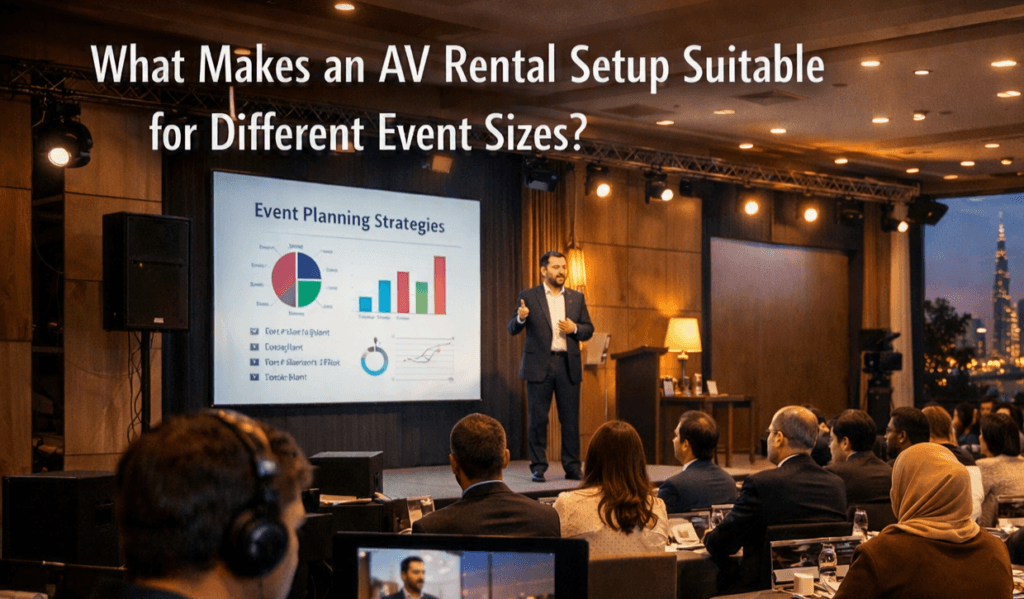
Choosing the right event equipment depends on the size of the audience, the venue, and the type of program. AV rental companies in Dubai often work with events that range from small meetings to large conferences. A suitable setup should match the event instead of using the same equipment for every occasion. The right combination of sound, screens, microphones, and control equipment can help people hear clearly, see important content, and follow the event comfortably.
Small Events Need Simple and Clear Equipment
Small events usually have a limited number of guests and take place in meeting rooms, training rooms, private halls, or small indoor spaces. These events may not need a large sound system or several display screens.
A basic setup can include a small speaker system, one display screen, a projector or large television, and a few wireless microphones. The equipment should be easy to operate so that speakers can move through their presentations without unnecessary technical steps.
For a small meeting, too much equipment can make the room feel crowded. A simple setup is often easier to manage and can provide a better experience for both speakers and attendees.
Medium Events Require Better Coverage
Medium-sized events often have more guests and larger rooms. Examples include workshops, seminars, product meetings, company gatherings, and training sessions.
As the audience grows, sound coverage becomes more important. A single speaker may not be enough to provide clear audio across the room. Additional speakers may be needed so people sitting farther away can hear without difficulty.
A medium event may also need multiple microphones, a larger display, or more than one screen. Content such as presentations, videos, charts, and speaker information should remain visible to people sitting at the back.
The setup should also allow equipment to work together smoothly. For example, the microphone system, speakers, laptop, presentation screen, and video source should be tested before the event begins.
Large Events Need Wider Sound and Visual Coverage
Large conferences, exhibitions, award programs, and corporate events can have hundreds or even thousands of attendees. These events often take place in large halls or outdoor areas where equipment must cover a much bigger space.
Sound is one of the main concerns. Speakers should be positioned carefully to provide even audio coverage without making the sound too loud near the front. Large displays, LED screens, projection systems, or multiple screens may be used so attendees can see presentations and live content from different areas.
Large events may also require stage microphones, confidence monitors, video switching equipment, cameras, and a central control area. These components help the technical team manage different parts of the program.
Venue Size Changes the Equipment Choice
The number of guests is important, but venue design also affects the setup. Two events with the same audience size may need different equipment if they are held in different spaces.
A long room may need additional speakers or screens to reach people at the back. A room with columns may have blocked viewing areas. Outdoor events may require equipment designed to work in open spaces.
Before selecting equipment, it is useful to check the room layout, ceiling height, stage position, seating arrangement, lighting conditions, and available power points.
Event Type Also Matters
The purpose of the event affects the equipment needed. A panel discussion may require several microphones, while a presentation may depend more on clear screens and reliable connections.
A live performance can require a larger sound system, stage lighting, microphones, and monitoring equipment. A business meeting may need video conferencing tools, presentation displays, and a simpler audio system.
This means event planners should consider what participants need to hear and see rather than choosing equipment based only on the number of guests.
Easy Operation Is Important
A good AV setup should not only work well; it should also be practical to operate. Complicated equipment can create delays when speakers change, presentations start, or videos need to be played.
For larger events, a trained technical team may manage the equipment from a control area. For smaller meetings, the system may be designed so that one person can operate the basic functions.
Testing before the event is also important. Checking microphones, cables, screens, speakers, laptops, and video sources can help identify problems before guests arrive.
Flexibility Helps With Different Event Needs
Event requirements can change even after planning has started. The number of speakers may increase, the seating arrangement may change, or an extra presentation screen may become necessary.
A flexible setup makes these changes easier to handle. Modular equipment can be added or adjusted according to the venue and program. This is particularly useful for events where different sessions have different technical requirements.
Matching Equipment to the Audience
The main goal of an AV setup is to make the event easy to follow. People should be able to hear speakers without strain and view presentations without constantly looking for a better position.
Small events can usually use compact systems, medium events need wider coverage, and large events require carefully planned sound and visual distribution. Considering the venue, audience, event type, and operating needs helps create a setup that fits the occasion.
For event planners comparing different equipment options, understanding these factors can make it easier to choose AV rental companies in Dubai that can match the technical setup to the size and needs of a particular event.