
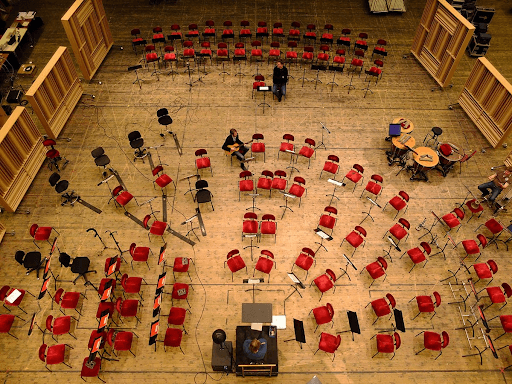
For decades, sound in commercial spaces served a narrow function. It filled silence. It masked noise. It supported presentations. Few organisations treated audio as a strategic asset.That view no longer aligns with how physical spaces compete.
As retail, hospitality, corporate, and cultural venues face increasing digital competition, experience becomes currency. Visual design has evolved rapidly. Lighting design followed. Audio often remained flat. Experiential design closes that gap by turning sound into a behavioural and commercial tool.
Immersive sound solutions do not simply improve acoustics. They shape perception, influence movement, and strengthen brand memory. The business case rests on these measurable outcomes.
Revenue Influence Through Dwell Time
Customer dwell time correlates with purchasing behaviour in retail and hospitality. Environments that encourage exploration generate higher average spend. Experiential audio design contributes directly to that dynamic.
Directional sound cues can draw attention to key zones. Layered soundscapes reduce sensory fatigue and create emotional comfort. When visitors feel immersed rather than overwhelmed, they remain longer. Longer visits increase interaction, and interaction supports revenue growth.
This is not theoretical. Studies in environmental psychology consistently show that sensory coherence influences consumer behaviour. Audio, when designed spatially rather than broadcast uniformly, becomes part of that coherence.
Brand Differentiation in Physical Spaces
Physical venues compete with digital convenience. Online platforms deliver speed. Brick-and-mortar locations must deliver experience.
Experiential audio reinforces brand identity beyond logos and colour schemes. A flagship store can design an acoustic signature that evolves across departments. A corporate innovation centre can integrate spatial audio into product demonstrations. Hospitality brands can craft atmospheres that shift from daytime calm to evening energy.
Immersive sound solutions allow precise placement of audio elements within three-dimensional space. This precision supports narrative storytelling. Customers do not just hear music. They experience a curated environment aligned with brand values.
Improved Communication and Productivity
In corporate settings, experiential audio design influences internal performance as well as external perception.
Open-plan offices often struggle with distraction. Traditional background music systems may increase overall noise density. Spatial audio systems allow targeted sound zoning. Collaboration spaces can host dynamic audio environments while focused work areas remain controlled and quiet.
Conference rooms equipped with object-based audio improve clarity during hybrid meetings. Voices can be positioned accurately within the room, reducing listener fatigue. Clearer communication supports efficiency. Efficiency influences cost control and performance outcomes.
Enhanced Event Impact
Corporate events, product launches, and experiential activations rely on engagement. Audio that moves through space increases immersion. Attendees respond more strongly to environments where sound complements visual elements dynamically.
When experiential audio is integrated with lighting and projection systems, it amplifies emotional intensity. Emotional intensity strengthens recall. In marketing terms, recall supports long-term brand value.
Operational Flexibility
Modern immersive sound solutions operate on networked platforms. Zones can be reconfigured without rewiring infrastructure. Seasonal campaigns, corporate messaging updates, or event-specific soundscapes can be deployed quickly.
This flexibility extends asset lifespan. Instead of static installations, organisations gain adaptable systems that evolve with strategy.
Risk Mitigation Through Acoustic Control
Poor acoustics create reputational risk. Excessive noise drives customer complaints. Echo-heavy environments undermine professional credibility. Experiential audio design includes acoustic modelling and sound management that reduce these risks.
Balanced environments protect brand perception and reduce operational friction.
Financial Considerations
Investment in immersive systems includes hardware, acoustic treatment, software, and integration. However, when assessed against increased dwell time, higher engagement, improved communication, and extended system flexibility, return on investment becomes measurable.
The cost of generic audio systems may appear lower initially. Over time, limited functionality and reduced experiential value narrow competitive advantage.
Strategic Positioning
Organisations increasingly recognise that experience drives loyalty. Experiential audio aligns with this strategy by adding dimension to physical environments.
Immersive sound solutions transform audio from background utility into strategic infrastructure. They support revenue generation, brand differentiation, productivity, and flexibility simultaneously.The business case is not about volume. It is about value.
When sound is designed intentionally, it influences how people feel, move, and remember. In competitive markets, that influence carries measurable commercial impact.