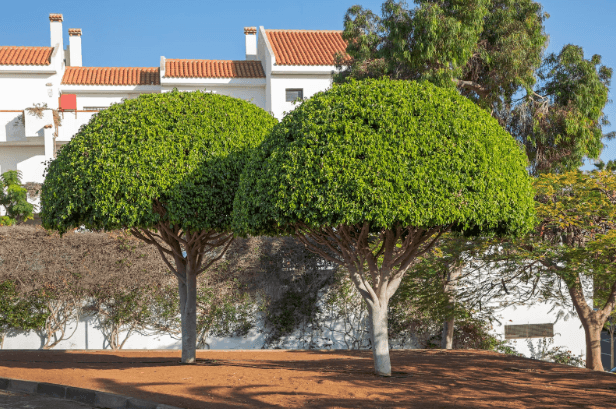
Ficus Tree Benefits for Privacy, Shade, and Garden Style
Ficus nitida (Indian Laurel Fig) is one of the most distinctive varieties and has become a preferred choice in modern landscaping for its versatility, dense foliage, and rapid growth. Known for its lush evergreen appearance, the Ficus tree enhances outdoor spaces by combining functionality with aesthetic appeal. Whether used in residential gardens or large commercial landscapes, it offers multiple benefits, making it a valuable addition to any environment.
Why the Ficus Tree Is Ideal for Modern Landscapes
The Ficus tree stands out for its adaptability and resilience. It thrives in a wide range of climates, tolerating heat, drought, and urban pollution once established. Its glossy, dark green leaves and structured growth habit create a polished and tropical look that complements various landscape styles. Additionally, it can be shaped into different forms, including hedges, topiaries, or standalone trees, making it suitable for both formal and informal garden designs.
Creating Natural Privacy Screens
One of the most significant advantages of a Ficus tree is its ability to form dense privacy barriers. Its thick foliage and fast growth allow it to quickly develop into a natural screen that blocks unwanted views and enhances seclusion. When planted in rows, Ficus trees can create tall, uniform hedges that serve as living walls, ideal for residential boundaries or outdoor spaces that require discretion.
Unlike artificial fencing, a Ficus tree provides a softer, more natural aesthetic while also contributing to environmental benefits such as noise reduction and improved air quality. Its dense canopy can act as a buffer against dust and external disturbances, making it particularly useful in urban or roadside settings.
Excellent Shade and Cooling Benefits
The Ficus tree is widely valued for its broad, dense canopy, which provides reliable shade throughout the year. As an evergreen species, it retains its foliage year-round, providing continuous protection from sunlight. This makes it an excellent choice for patios, gardens, and walkways where cooling and comfort are essential.
The shade provided by a Ficus tree also helps reduce heat in outdoor and surrounding areas. Blocking direct sunlight, it helps lower surface temperatures and can even reduce energy consumption in nearby buildings by minimizing the need for artificial cooling.
Enhancing Garden Style and Aesthetics
Beyond functionality, the Ficus tree significantly elevates the visual appeal of a landscape. Its lush, glossy leaves and symmetrical growth pattern create a clean and sophisticated look. Whether used as a centerpiece tree, a neatly trimmed hedge, or sculpted into decorative shapes, it adds structure and elegance to outdoor spaces.
Its versatility allows it to fit into various garden styles, from tropical and contemporary to minimalist and formal. Gardeners can prune and shape the tree to achieve specific design goals, such as geometric hedges or ornamental forms, enhancing both creativity and visual impact.
Low Maintenance and Long-Term Value
Another key benefit of the Ficus tree is its relatively low maintenance once established. It is resistant to many pests and diseases and can tolerate varying soil conditions. With moderate watering and occasional pruning, it continues to thrive, maintaining its shape and density over time.
Its fast growth rate also ensures quicker results compared to many other landscape trees, making it a practical choice for homeowners and landscapers seeking immediate impact. Over time, its durability and adaptability provide long-term value, reducing the need for frequent replacements or intensive care.
Conclusion
The Ficus tree delivers an ideal blend of privacy, shade, and visual appeal, making it a preferred choice for contemporary landscaping. Its dense foliage forms effective natural screens, while its broad canopy ensures consistent shade and comfort. The tree’s refined appearance enhances overall garden aesthetics, adding structure and elegance to outdoor spaces. With strong adaptability and minimal maintenance needs, it thrives in various environments. For homeowners and landscapers, combining Ficus trees with professional privacy hedge solutions can create outdoor areas that are both functional and visually striking, offering lasting comfort, style, and sustainability.