
When Ankle or Foot Pain Needs Further Investigation
Ankle and foot pain can affect almost every part of daily life. Walking, exercising, standing at work and even simple activities around the home can become uncomfortable when an injury or ongoing condition affects the foot or ankle.
Pain may develop after a sports injury, ankle sprain, repetitive activity or gradual changes in a tendon or ligament. Swelling, stiffness, tenderness and reduced movement can also indicate that further assessment may be useful.
An ankle and foot ultrasound scan eastleigh can provide real time information about many of the soft tissue structures in this area. For people looking for an ankle ultrasound scan in Eastleigh or a foot ultrasound scan near Southampton, diagnostic imaging can be an important part of a wider clinical assessment.
What Is an Ankle and Foot Ultrasound Scan?
A diagnostic ultrasound scan uses high frequency sound waves to create images of structures underneath the skin. Unlike an X ray, ultrasound does not use radiation and can be used to assess many soft tissues.
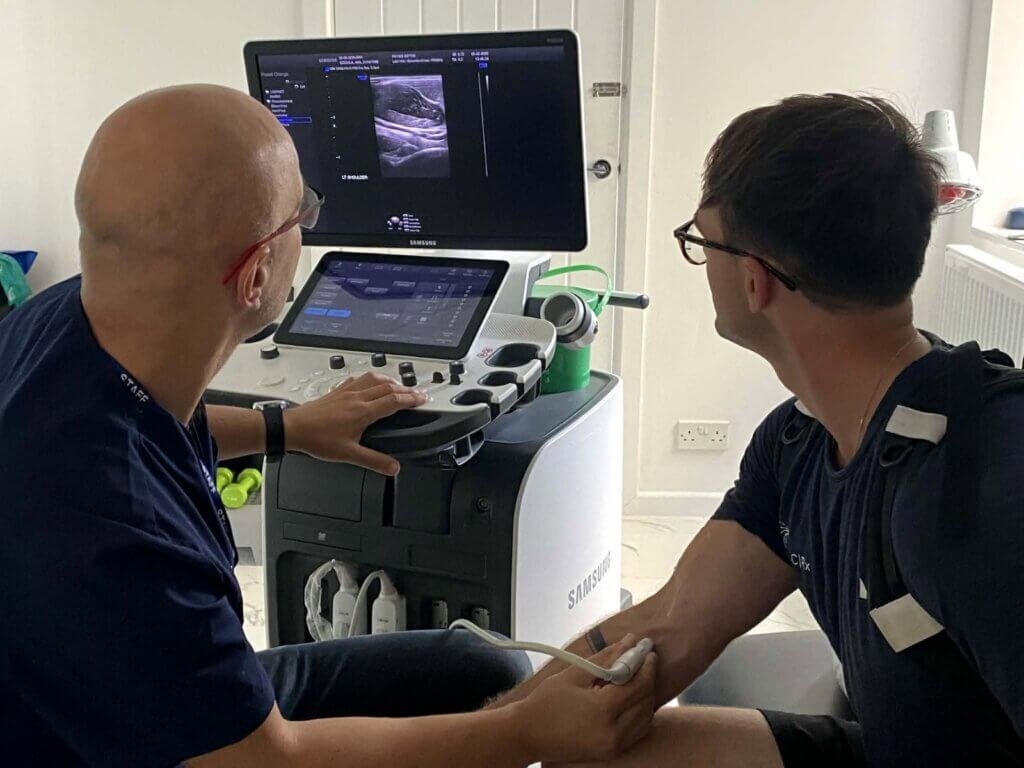
At Physio Soton, diagnostic ultrasound is available for joints including the ankle and foot, as well as muscles, tendons and ligaments. The scan is combined with a physiotherapy consultation and clinical examination, helping the clinician understand the relationship between the patient’s symptoms and the imaging findings.
This combination can be useful because an image alone does not always explain why a person is experiencing pain. A proper assessment considers symptoms, movement, physical examination and imaging together.
What Can an Ankle Ultrasound Scan Assess?
An ultrasound examination can be useful for investigating a variety of ankle problems. Depending on the symptoms, the clinician may assess tendons, ligaments, fluid, inflammation and other soft tissue structures.
For example, ultrasound can be used when assessing ankle sprains and injuries involving structures such as the ATFL and CFL ligaments. Tendons around the ankle can also be assessed dynamically, allowing the clinician to observe how structures behave during movement.
This can be particularly useful for people with ongoing pain after an injury, athletes returning to activity, or patients who have developed symptoms without a clear traumatic event.
Foot Ultrasound for Persistent Foot Pain
Foot pain can have many different causes, which means an accurate assessment is important. Tendon problems, plantar fascia conditions, joint problems and other soft tissue issues can all produce similar symptoms.
A foot ultrasound scan can help assess relevant soft tissue structures and may provide useful information when symptoms have continued despite rest or basic treatment.
Physio Soton also provides assessment for plantar fasciitis and heel pain. Their clinical approach can include ultrasound imaging to identify changes such as swelling or thickening of the plantar fascia and compare findings between both feet when appropriate.
Achilles Tendon and Ankle Ultrasound
The Achilles tendon is one of the most important structures around the ankle. Problems affecting the tendon can cause pain during walking, running, jumping or other activities.
Ultrasound can help visualise changes within the Achilles tendon, including tendinopathy, partial or full thickness tears, inflammation around the tendon and calcific changes. Dynamic assessment can also provide additional information about tendon movement and function.
For patients experiencing persistent Achilles pain, combining diagnostic imaging with physiotherapy assessment can help guide rehabilitation and load management.
Ankle Sprains and Ligament Injuries
Ankle sprains are common among sports participants and active people. A sudden twist or change in direction can place significant stress on the ankle ligaments.
Although many ankle sprains improve with appropriate rehabilitation, some patients continue to experience pain, swelling or a feeling of instability. In these situations, an ultrasound assessment may help examine the relevant ligaments and tendons.
Real time imaging can also allow the clinician to assess certain structures while the ankle is moved. This can provide information that may not be available from a static examination alone.
Why Choose Diagnostic Ultrasound?
One of the main advantages of musculoskeletal ultrasound is that it provides real time imaging. The clinician can assess structures while the patient moves, which can be helpful when investigating certain tendon and ligament problems.
Ultrasound is also non invasive and does not use radiation. Physio Soton describes its diagnostic ultrasound service as a consultation that includes clinical examination, scanning and a comprehensive report.
Another advantage is that the findings can be discussed during the same appointment, allowing the patient to understand the possible cause of their symptoms and the recommended next steps.
What Happens During an Ankle or Foot Scan?
An appointment begins with a discussion about the patient’s symptoms and relevant medical history. The clinician then performs a physical examination to assess movement, strength, tenderness and other relevant findings.
The ultrasound examination is performed using gel and an ultrasound probe placed over the area being assessed. Different structures can be examined depending on the symptoms and clinical findings.
Physio Soton’s diagnostic ultrasound service includes a physiotherapy consultation, diagnostic scan and comprehensive report. Where appropriate, patients can also receive personalised advice about exercises or therapy to support recovery.
Does Every Ankle or Foot Problem Need an Ultrasound?
Not every foot or ankle problem requires diagnostic imaging. Some conditions can be managed successfully following a clinical assessment without a scan.
However, ultrasound may be useful when symptoms are persistent, when a soft tissue injury is suspected, or when the clinician needs additional information to guide treatment.
In some cases, further investigation such as an MRI may be more appropriate. Physio Soton states that patients may be referred for additional investigation when clinical examination and ultrasound findings indicate that this is necessary.
From Diagnosis to Treatment
A scan is only one part of the recovery process. Once the likely cause of symptoms has been identified, treatment can be planned around the patient’s condition and goals.
Physiotherapy may include targeted exercises, strength work, mobility training, load management and rehabilitation. For certain conditions, ultrasound findings may also help determine whether additional treatment options should be considered.
Physio Soton provides diagnostic ultrasound alongside physiotherapy and ultrasound guided treatments when clinically appropriate.
Ankle and Foot Scan in Eastleigh Near Southampton
Physio Soton is based at 297 High Street, Eastleigh, SO50 5NB. The clinic welcomes patients from Eastleigh, Southampton, Winchester, Romsey, Chandler’s Ford and surrounding Hampshire areas.
For someone searching for an ankle scan in Eastleigh, foot ultrasound scan near Southampton, or diagnostic ultrasound in Hampshire, having assessment and imaging available in one appointment can make the process more straightforward.
Frequently Asked Questions
Is an ankle ultrasound scan safe?
Musculoskeletal ultrasound is non invasive and does not use radiation. It is commonly used to assess soft tissues such as tendons and ligaments.
Can ultrasound detect an ankle ligament injury?
Ultrasound can assess several ankle ligaments and tendons, including structures commonly involved in ankle sprains. Dynamic assessment can also be used where appropriate.
Can a foot ultrasound assess plantar fasciitis?
Yes. Ultrasound can be used as part of an assessment for plantar fasciitis and may identify changes such as thickening or swelling of the plantar fascia.
Do I need a GP referral?
Physio Soton states that a GP referral is not required for its diagnostic ultrasound service. Patients can book directly with the clinic.
Can I receive an ultrasound report?
Yes. Physio Soton states that the diagnostic ultrasound appointment includes a comprehensive scan report, with a copy provided to the patient and GP where appropriate.
Final Thoughts
Persistent ankle and foot pain shouldn’t always be managed through guesswork. A detailed clinical assessment combined with diagnostic ultrasound can provide useful information about tendons, ligaments and other soft tissue structures.
Whether the problem is related to an ankle sprain, Achilles tendon pain, plantar fasciitis, tendon injury or another musculoskeletal condition, the findings can help guide the next stage of care.
For patients searching for an ankle and foot ultrasound scan in Eastleigh, ankle ultrasound Southampton, or diagnostic foot scan in Hampshire, Physio Soton provides assessment, imaging, reporting and personalised treatment advice from its Eastleigh clinic.
Physio Soton provides physiotherapy, diagnostic ultrasound scanning and ultrasound guided treatments for patients across Eastleigh, Southampton and surrounding Hampshire areas. The clinic offers assessment for ankle, foot, tendon, ligament and other musculoskeletal problems, with treatment recommendations based on clinical findings. To learn more about Physio Soton, its services, location and customer reviews, visit the business profile here: https://share.google/yuG2NDhe4hivLPAbz


In today’s world, fitness and sports have become an integral part of healthy living. Whether it is professional athletes or Read more