
Managing business finances has changed significantly in recent years. Traditional bookkeeping methods that relied on paperwork and desktop software are gradually being replaced by modern cloud-based systems. In 2026, many businesses are turning to cloud technology to streamline their accounting processes, improve efficiency, and gain better financial visibility. For example, businesses working with a Cloud Bookkeeper Perth can manage their financial records online while maintaining accuracy and organization. Cloud bookkeeping allows companies to access financial information anytime and simplifies many day-to-day accounting tasks.
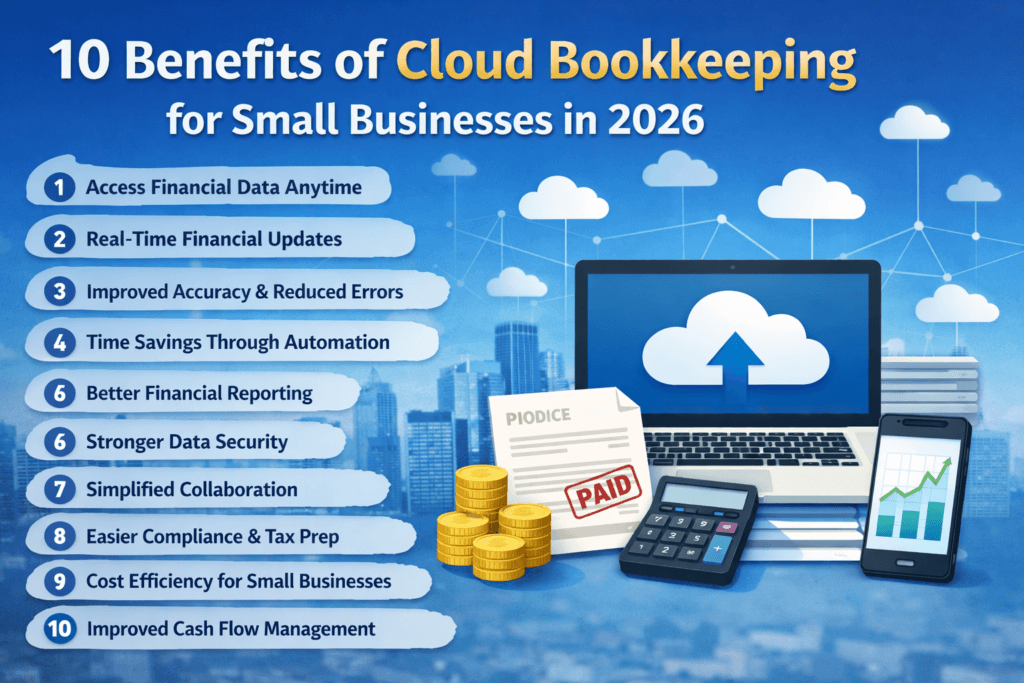
Below are ten important benefits of cloud bookkeeping for small businesses in 2026.
1. Access Financial Data Anytime, Anywhere
One of the most significant advantages of cloud bookkeeping is the ability to access financial information from anywhere. Business owners can log in to their accounting system using a laptop, tablet, or smartphone as long as they have an internet connection. This flexibility allows them to review reports, monitor expenses, or check balances even when they are away from the office. For small businesses that operate remotely or have multiple locations, this accessibility makes financial management far more convenient.
2. Real-Time Financial Updates
Cloud bookkeeping systems automatically update financial data in real time. Every transaction, invoice, or payment recorded in the system becomes instantly visible in the financial records. This means business owners always have an up-to-date picture of their finances. Real-time updates help businesses make informed decisions quickly and avoid relying on outdated financial information.
3. Improved Accuracy and Reduced Errors
Manual bookkeeping often leads to mistakes such as duplicate entries, calculation errors, or misplaced records. Cloud accounting software automates many processes, including calculations and data synchronization, which significantly reduces the risk of human error. Automatic bank feeds and reconciliation features also help ensure financial records remain accurate and consistent.
4. Time Savings Through Automation
Small business owners often spend a significant amount of time managing invoices, recording transactions, and reconciling accounts. Cloud bookkeeping platforms automate many of these tasks. Features such as automated invoicing, recurring payments, and bank transaction imports help reduce manual work. This allows business owners and accountants to focus on more important aspects of running and growing the business.
5. Better Financial Reporting
Cloud bookkeeping systems provide detailed financial reports that are easy to generate and understand. Businesses can quickly access profit and loss statements, balance sheets, cash flow reports, and expense summaries. These reports help business owners understand their financial position and identify trends that may affect future performance. Having clear financial reports also makes it easier to plan budgets and business strategies.
6. Stronger Data Security
Financial information is one of the most sensitive types of business data. Cloud bookkeeping platforms invest heavily in advanced security systems to protect this information. Data is usually encrypted and stored on secure servers with regular backups. In contrast to traditional systems where data may be lost due to hardware failure, cloud platforms ensure financial records remain safe and recoverable.
7. Simplified Collaboration
Cloud bookkeeping allows multiple users to access financial data simultaneously. Business owners, accountants, and bookkeepers can work together within the same system without sending files back and forth. This real-time collaboration improves communication and reduces delays when reviewing financial records or preparing reports. It also helps ensure everyone is working with the most accurate data.
8. Easier Compliance and Tax Preparation
Preparing taxes and meeting financial regulations can be challenging for small businesses. Cloud bookkeeping systems help organize financial records in a structured way, making it easier to track expenses, income, and tax-related transactions. When tax time arrives, financial reports can be generated quickly, saving time and reducing stress. Proper recordkeeping also helps businesses remain compliant with financial regulations and reporting requirements.
9. Cost Efficiency for Small Businesses
Hiring a full-time in-house bookkeeper may not always be affordable for small businesses. Cloud bookkeeping offers a cost-effective alternative by allowing businesses to manage accounting tasks more efficiently with fewer resources. Many cloud accounting platforms also offer scalable pricing plans, allowing businesses to pay only for the features they need. This flexibility makes cloud bookkeeping suitable for businesses of different sizes.
10. Improved Cash Flow Management
Cash flow is one of the most important factors in the success of a small business. Cloud bookkeeping tools allow business owners to track incoming and outgoing payments in real time. Automated invoicing and payment tracking features help ensure that invoices are sent promptly and payments are monitored closely. By having a clear overview of cash flow, businesses can plan expenses more effectively and avoid financial surprises.
Conclusion
Cloud bookkeeping has become an essential solution for small businesses looking to manage their finances more efficiently in 2026. By providing real-time financial data, automation, improved accuracy, and secure access to financial records, cloud-based systems simplify many aspects of bookkeeping. These tools also help businesses save time, collaborate more effectively, and maintain better control over their financial operations.
As technology continues to evolve, cloud bookkeeping will likely play an even greater role in modern business management. For small businesses aiming to stay organized and make informed financial decisions, adopting cloud bookkeeping can be a valuable step toward long-term growth and stability.
Source: theglobalnewz